



The Problem No One Wants to Admit
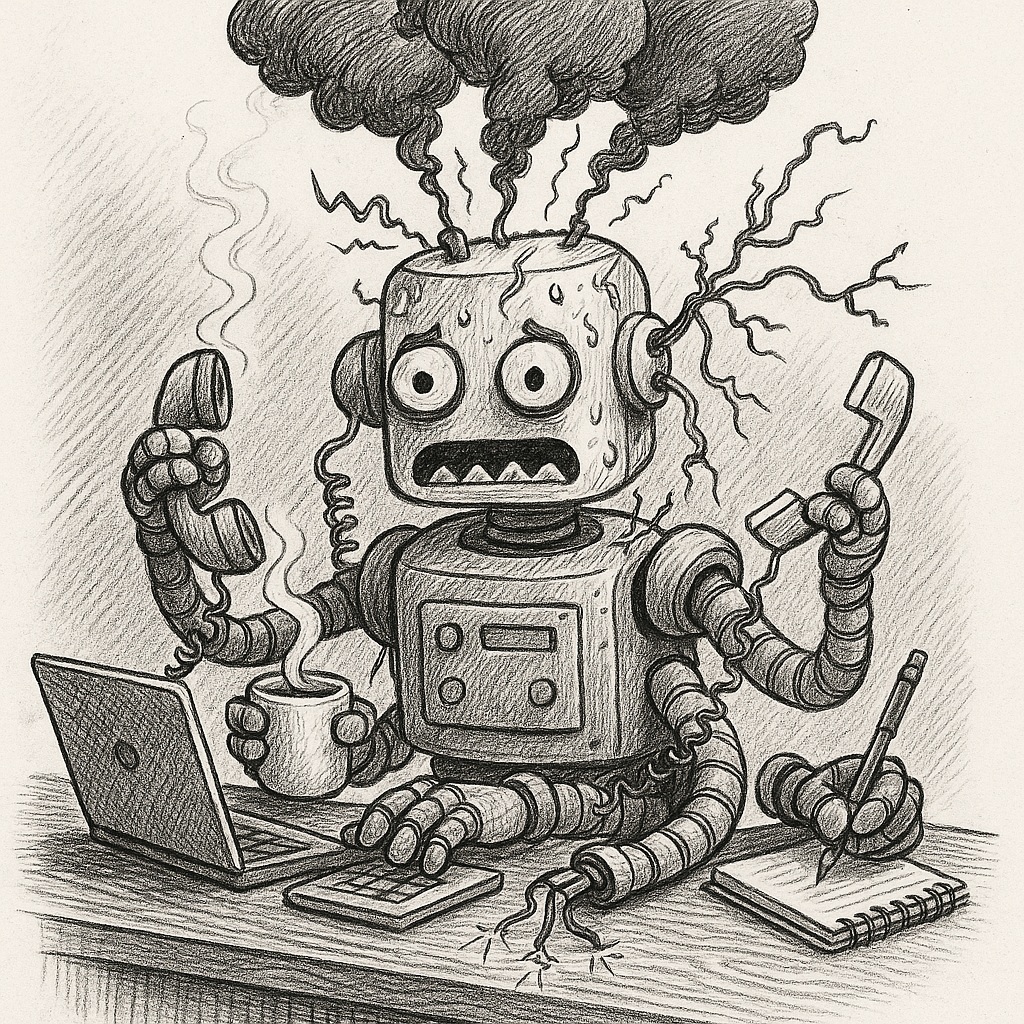
AI is everywhere in sales outreach now. Every tool claims to “write emails for you,” “reply automatically,” or “handle your inbox.” On paper, it sounds amazing. In practice, AI still falls short where it matters most: nuanced human communication.
Sales is not a list of tasks. It is a relationship.
And AI cannot fully manage that relationship for you.
AI can draft messages, summarize calls, and help organize your next steps. What it cannot do is carry a conversation with the emotional intelligence, memory, personalization, and nuance that prospects expect when dealing with an actual human being.
That is why AI sucks at doing it all.
And email autoresponders are the clearest example of the problem.
AI Autoresponders Fail Because They Sound Robotic
Most AI-generated email responses read like they were stitched together from corporate templates. They repeat the same language patterns. They default to safe, vague phrasing. They avoid strong opinions. They rarely match the voice or tone of the rep they are pretending to be.
Prospects feel the difference immediately. They know when the “person” writing to them is not a person at all. The result is a conversation that feels flat, generic, and inauthentic.
In a world where every inbox is already full of canned replies, sounding robotic is the fastest way to lose a prospect’s interest.
AI Misses Relationship Context
AI tools do not know your history with a prospect unless you feed it that information manually, and even then the memory is shallow.
Examples of things AI typically misses:
- What a prospect said in a call six months ago
- A commitment made verbally during onboarding
- Inside jokes or shared experiences from the relationship
- How frustrated or excited the prospect felt on a call
- A complex objection raised earlier in the conversation
- Nuance around pricing, budgets, or custom agreements
AI cannot fully track the emotional arc of a relationship.
And if it cannot understand the relationship, it cannot reply properly.
Most AI email responses come from a single input or short snippet. That means they respond to words, not meaning. They reply to sentences, not context. And that context is where sales happens.
AI Often Gets the Tone Wrong
Even the best language models still struggle with tone matching. Sales email tones vary heavily by situation:
- A nervous prospect
- A frustrated customer
- A warm lead
- An enterprise evaluator
- A referral asking a casual question
- A revival outreach to a dormant account
AI often misunderstands intensity, intent, emotional cues, sarcasm, humor, or subtle pressure. The result is a message that feels “off,” even if the information is technically correct.
Tone mismatch kills trust instantly.
When a prospect feels like you are out of sync with their emotional state, they disengage.
AI Lacks Long-Term Memory
AI systems do not fully remember:
- What happened three email threads ago
- A change in buying committee dynamics
- Internal politics your champion mentioned
- Promised follow ups that slipped
- Relationship history across multiple users
Sales conversations are nonlinear. They span days, weeks, months, and in B2B environments, sometimes years. AI grapples with continuity.
So an AI autoresponder might accidentally:
- Repeat a message already sent
- Ask questions someone already answered
- Offer information they already have
- Create a contradiction
- Respond too casually to a serious message
One mistake like this damages credibility.
AI Cannot Replace the Human Judgement Required in Sales
Sales requires interpretation, not just information.
A great salesperson reads between the lines, interprets silence, identifies unspoken objections, and adjusts messaging based on subtle cues.
AI cannot do that.
And pretending that it can is dangerous.
AI should support the seller’s judgement, not replace it.
Where AI Actually Excels in Sales (And Where It Should Be Used)
AI is not useless. In fact, when used correctly, it is transformative.
AI is great at:
- Drafting rough messages
- Summarizing calls and key points
- Organizing follow up tasks
- Researching accounts
- Prioritizing opportunities
- Logging activities
- Reducing admin burden
- Enhancing personalization at scale
- Keeping follow up consistent
AI is a multiplier when it acts behind the scenes.
It becomes a liability when it tries to speak for the rep.
This is why QORD.ai does not pretend AI can run your entire inbox.
Instead, QORD.ai uses AI to handle the heavy lifting so the rep can show up with the right message and the right context every time.
Why Full Automation Is Not the Future of Sales
The idea of AI “doing it all” comes from a fantasy of frictionless automation. It is tempting, but unrealistic. AI will never fully replace:
- Human tone
- Human empathy
- Human judgement
- Human memory
- Human improvisation
- Human trust building
What AI can replace is the grind.
What AI cannot replace is the relationship.
Tools that try to do everything end up doing the most important things poorly. Tools that focus on supporting the rep win.
This is the philosophy behind QORD.ai.
How QORD.ai Fixes the Problem AI Created
QORD.ai avoids the biggest mistake in AI design: using AI to speak for the rep. Instead, QORD.ai uses AI to:
- Keep follow up consistent
- Surface the right context
- Reduce admin work
- Maintain account memory
- Support the rep in writing relevant messages
- Enable the rep to stay human, not robotic
The result is the perfect mix of human connection and AI efficiency.
AI is the engine.
The rep is the driver.
My two cents...
AI is powerful, but it is not human. And when it pretends to be, it breaks trust.
The future of sales belongs to reps who use AI as leverage, not a crutch.
Teams that rely on AI autoresponders for human communication will lose conversations, lose momentum, and lose deals.
Use AI to support the rep, not replace them.
Use AI to maintain consistency, not personality.
Use AI to boost follow up, not automate away the relationship.
If you want every rep to sound like a human again, QORD.ai exists for exactly that.
.svg)

.svg)

