
March 31, 2026
Jared Auld





We've been tracking Harmonic lately, and their approach to AI development has really caught our attention.
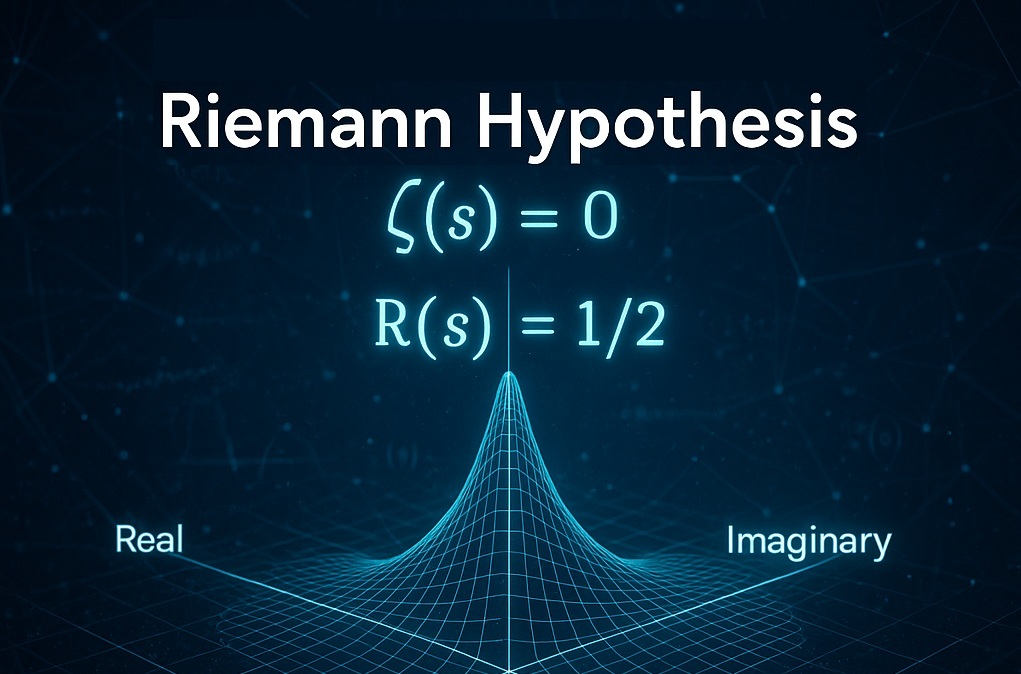
Harmonic, co-founded by Vlad Tenev, is focused on building what they call "mathematical superintelligence." Their AI model, Aristotle, is designed to solve complex mathematical problems with verifiable accuracy - not approximations, but precise, reliable solutions.
What stands out to us is the founding team's pedigree. Vlad Tenev co-founded Robinhood, the commission-free trading app that fundamentally disrupted the financial services industry. He's a guy who has already proven he can execute on a moonshot product at scale.
But let's be real: Harmonic isn't just about the founders or the hype. Their approach to AI feels refreshingly anchored in the real world.
The Problem Harmonic is Solving
Here's the thing about most AI today: it's incredibly good at pattern matching and generating text that feels human. But when you ask it to solve something that requires precise logic, it struggles.
Mathematic al problems, code verification, symbolic reasoning - these are areas where AI consistently falls short. The models are probabilistic, meaning they work by predicting the next token with the highest likelihood. That approach works great for natural language, but it breaks down when precision matters.
Harmonic is tackling this head-on with Aristotle, their mathematical reasoning engine. The idea is simple but profound: build an AI model that can solve mathematical and logical problems with verifiable correctness.
Not good enough. Correct.
Why This Matters
You might be thinking, "Okay, cool. But why should I care about AI that does math?"
Because math is everywhere. In finance, in engineering, in physics, in biology - virtually every technical field relies on mathematical reasoning. And right now, the AI tools we have can generate code, can summarize documents, can write emails. But they can't reliably solve the kinds of mathematical problems that these industries depend on.
This is Qord's insight, and it's why we're bullish on Harmonic.
If you can build AI that reasons mathematically with the same fluency that GPT-4 generates text, you've unlocked something genuinely new. You're not just automating existing knowledge work - you're creating a new category of capability.
The financial services industry alone could be transformed. Algorithmic trading, derivatives pricing, risk modeling - all of these rely on mathematical reasoning that could be exponentially faster and more accurate with a model like Aristotle.
The Execution Challenge
Of course, building this is incredibly difficult. The founding team at Harmonic includes researchers and engineers who have worked on some of the hardest problems in AI.
But there's a reason we're excited: they're not trying to solve this with a bigger transformer model. They're taking a fundamentally different approach, combining symbolic reasoning with neural networks in a way that hasn't been done at this scale before.
That's the kind of technical innovation that actually moves the needle.
The Takeaway
Harmonic is one of the few AI startups we're watching that feels like it's solving a real problem with a genuinely novel approach. The founding team has the pedigree to execute. And the market opportunity - if they pull this off - is enormous.
We're not saying they'll succeed. Building AI is hard, and the graveyard of AI startups is full of brilliant ideas that didn't work out. But Harmonic is the kind of bet we'd make.
If you're interested in how AI is evolving beyond chatbots and into genuinely hard problems, keep an eye on what they're doing. This is the future of AI.